
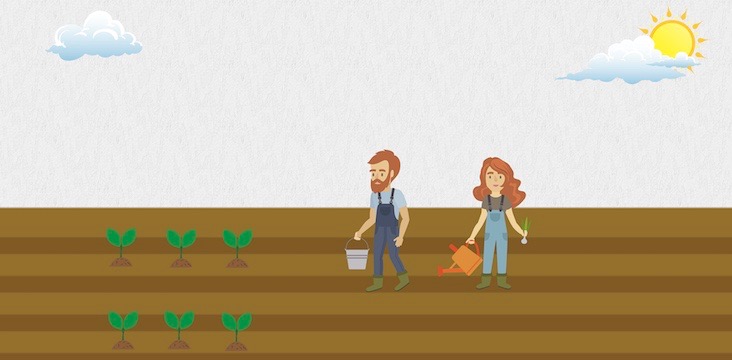
Be patient, therefore, brothers, until the coming of the Lord. See how the farmer waits for the precious fruit of the earth, being patient about it, until it receives the early and the late rains. – James 5:7 (ESV)
Homeschooling is the epitome of delayed gratification. This can be a real challenge as many new homeschooling parents are already nervous about going against the flow of culture and are therefore not yet confident of God’s grace in, to, and through them. Add to this the feeling of living in pressurized fishbowls of others’ expectations, and it is easy to understand why so many are desperate to see some sense of progress early in the homeschooling journey. It is not about pride or justification; they just want to make sure they are not ruining their children’s future. While the motivation is pure, the reality is that they may not see much for some time.
Homeschooling your child is like farming. While you will always be discovering unique tools to help you along the way, the basic tenet is getting the seed into the soil of your children’s minds, and then nature does the rest. God has wired your child to learn. Your job description is to provide an environment with good soil (a loving home), plant the seed (spend intentional time with them doing both school and life), and seek God’s face for He is the one that makes the seeds of knowledge and wisdom grow (1 Corinthians 3:6).
I know this over-simplification sounds like a commercial, but it has more truth in it than we realize. I have observed parents get highly concerned because a child doesn’t meet the status quo of the child development learning curve. We can quickly forget that God creates each child uniquely. Personally, we have had a child read fluently at four and another struggle at eight, but when the eight-year-old started reading, he devoured book after book. This reminds us that every seed (child) has a different genetic makeup. Some grow faster in certain seasons of life while others may grow slower. Sure, there can ultimately be a need for intervention in some cases, but we should never be in a hurry.
It is important to note that our children will take their homeschooling cues from us. If we get flustered and impatient, they will sense it, and it will cause them undue stress and self-doubt. They may say they want to go to public school even though they have no idea what that means. is nothing more than a knee-jerk reaction to the momentary frustrations of homeschooling. happens. Like a farmer who waits patiently for his crop to grow, we too must be patient through the varying seasons of life, knowing growth and maturation are a natural and Godly process. Times of drought or floods will threaten our children, but when seen through the lens of God’s will, they become vehicles through which His grace flows.
Jesus Christ is our example as He is waiting for the Father’s timing to reap the harvest of the world. If He has been willing to wait for six millennia of man’s history, we would do well to wait upon the rain of His grace for a few years. After all, homeschooling progress is not measured day-by-day, week-by-week or month-by-month but by years. Between the now and the not yet, life can be difficult. This is why we must seek to cultivate a position of faith and patience, knowing that God will create a wonderful crop in the lives of our children in His Divine time.

-300x147.jpg)