
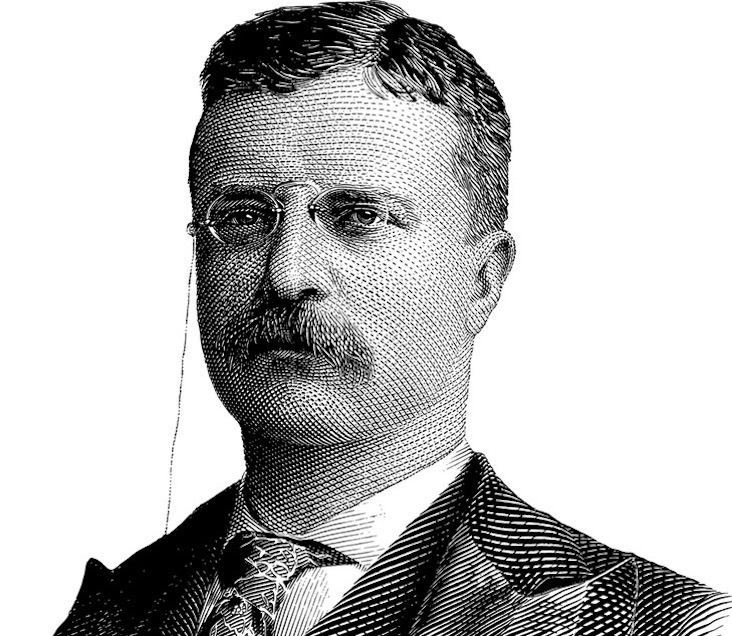
“The most important single ingredient in the formula of success is knowing how to get along with people.” – Theodore Roosevelt
Teddy Roosevelt, the 26th President of the United States, was himself homeschooled. Perhaps this is one reason he is looked upon as one of the greatest leaders in our country’s history. Not that homeschooling in and of itself automatically produces great leaders; it does, however, have an innate ability to connect learning with real life. Alternatively, public school, for all practical purposes, is an overall failed experiment in employing an artificial social environment to initiate young adults into the world of marriage, family, and all other adult responsibilities.
Roosevelt’s approach to leadership was practically described as a servant leader. His approach was very down to earth. Furthermore, his ability to get along with others – even those considered to be his adversaries – was legendary. In many ways he was a genuine paradox. He was a man’s man, rugged and tough, yet he was also extremely intelligent, being widely read and deeply thoughtful. The thing that should encourage us the most is that he considered himself to have “a second-rate brain” even though he was a president, thereby challenging us that anyone can rise to greatness if we are willing to apply ourselves through God’s grace. He noted that one of the most important things we can do on life’s journey is to develop good people skills.
Although socialization is often considered one reason not to home educate by the general populace, it is, in fact, one of the foundational motivations to teach our children at home. Proverbs 13:20 clearly states, “Whoever walks with the wise becomes wise, but the companion of fools will suffer harm.” Even among Christian young adults, there can be folly, and we will not even talk about what goes on in public school hallways, classrooms, bathrooms, and locker rooms. It is so much better for a young man or woman to spend time with their parents than with their peers in order to learn how to get along with others, treating them with respect and honor rather than with sarcasm and teasing.
No, we may not have an official interpersonal communication class in the home, but by simply conversing throughout the ordinary days, weeks, months, and years, young people will learn to think, act, and speak as an adult because good company will create good habits. People skills are more caught than taught. It is an ability we acquire, either for the good or the bad. Such is true about most of the important lessons in life.
Academic success is simply an added bonus to homeschooling. A real blessing occurs when after 18-22 years of walking side by side with their parents, young adults know how to relate to others. Those who are cordial and those who are difficult. Those who are very old and those who are very young. Those who are their authorities and those who are their subordinates at work. Those who are spiritual and those who are not.
For years, a junior high report card had two facets: one for actual grades and the other for social competence. One category was, “Gets along well with others.” Going past the laughable fact that a teacher of 30 students would have time to make a thoughtful and accurate judgment based on interactions that take place on the playground or in the classroom, the parent who lives with their child in the home where character is truly exhibited is best positioned to know how well their child relates to others.
One of the best ways to gauge future success – vocational, marital, parental, social – is by instilling good people skills within our children. This is not learned in the classroom but by doing life together.

-300x147.jpg)