
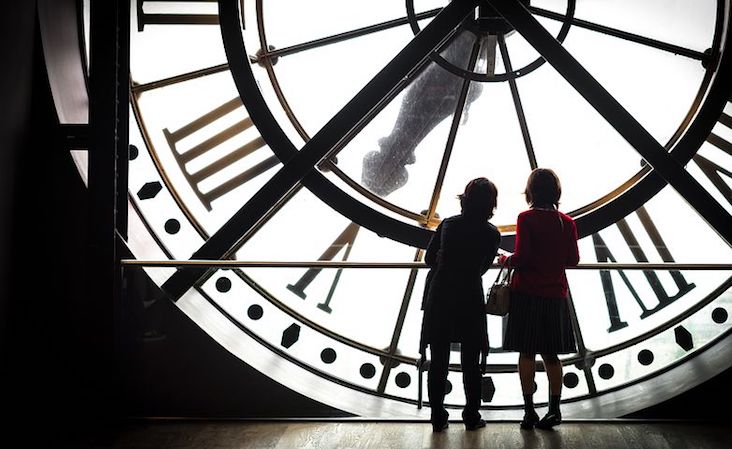
While the world seeks after the temporary trinkets of gold and silver, Christians understand the most valuable commodity we have at our disposal is the gift of time, which God gives each of us to work out His will here on earth. Homeschool parents are especially sensitive to this reality as we sacrifice much to get the most amount of time with our children possible. One survey said a homeschool mother spends 77 hours each week with her children compared to 13.5 hours for a mother who puts her children into public school. More important yet, most of these same mothers put serious intention on how to best order their time in order to maximize their investment in their children.
To cause him to number his days and redeem the opportunities with his family (Eph. 5:16), one father took a jar and filled it with 936 marbles, each representing one of the 936 weeks he had to spend with his child before his 18th birthday. After only six years, the jar was already a third of the way empty. It was a stark reminder of how quickly the years fly by. I believe all of us can relate.
So what are some things that we can do to have the biggest bang for our buck when it comes to spending time with our children? The best and most effective way to teach our children is to encapsulate in our own personal lifestyles the lessons we want them to embrace. Most lessons in life are caught not taught. For instance, it is one thing for us to tell our children to exercise, but when they see us intentionally walking, jogging, or working out, it puts an exclamation point on the need for P.E. class. The same is true for our devotional life and reading to broaden our horizons. We cannot not teach our children.
We should never forget the power of fifteen minute blocks of time. Charles Spurgeon said, “The way to do a great deal is to keep on doing a little. The way to do nothing at all is to be continually resolving that you will do everything.” It is a very real temptation to think of education as taking place in big chunks of time and experience but in actuality, if we study something for fifteen minutes, slowly and intently, it will be much more effective in the long haul than spending hours on end. For instance, it is better to learn 100% of ten vocabulary words than 10% of one hundred words. have to get past the cramming mentality that so many of us grew up with. have time.
Finally, preparation helps us be more efficient. So many react to life rather than proactively engaging it. Proverbs 30:25 encourages us to be like ants that “prepare their food in the summer.” How do we do this? One easy way is to take a couple of minutes out each Sunday night and think about the upcoming week. What are the “big rocks” that we want to get accomplished? What projects are going to take the most time? Are we allotting enough time for these activities? This should not only be done on a weekly level but also on a daily basis, especially the night before. This need not be some big exhaustive exercise but rather a brief moment of reflection to get our minds engaged.
The glory of homeschooling is that it is life-integrated. As we seek orderliness in our schedule, our children will automatically learn from our example. If we have done poorly in the past, repent, and then move on. Engage your children, especially your older ones in discussion on how you feel your family uses time. You might be surprised how much they want to learn about the most important commodity we have in life … time.

-300x147.jpg)