
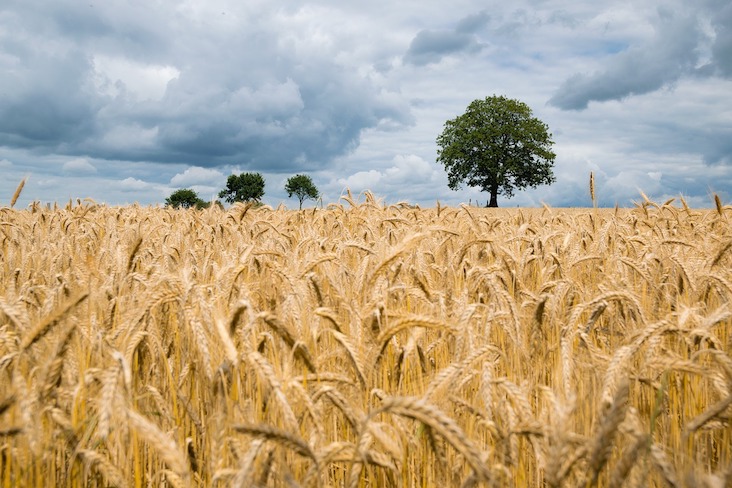
God foretells Jeremiah that his uncle is going to come to him soon with an offer for Jeremiah to buy the family farm. This no doubt perked Jeremiah’s interest; after all, so many men dream of having a little spread of their own. The only problem? The circumstances were incredibly inconvenient.
First, Jeremiah was in prison. For months he had been prophesying about the coming judgment of God and the downfall of the holy city, Jerusalem. This had not set well with the King or the locals. In fact, he was a hair’s breath from being executed. Second, the Babylonians were literally at the gates, hoping to strangle the beleaguered city into submission. It was becoming increasingly obvious to all that Jerusalem’s days were numbered. The outlook was bleak.
Still, when Jeremiah’s uncle did indeed come to him with the prophesied proposal, Jeremiah accepted and paid out seventeen shekels of silver. This action was wittingly prophetic of a time in the future, after judgment had come and gone, when houses, fields, and vineyards would once again be bought and sold in Jerusalem, signaling that better days were ahead.
We recognize in God’s economy that He often calls us to do things that are counter intuitive in the moment, not to mention completely counter cultural. This is not to be interpreted as “the weirder the more spiritual,” as some would suggest; instead, God wants us to walk by faith even when his instructions seem unwise to the pragmatic eye. God delights in showing how His ways are so much higher than the world’s. For instance, He tells us when we water others, we are actually watering ourselves. When we give ten percent—or more—He promises to open up windows in heaven and pour out such a blessing that we won’t have room for it. When we give our lives away, we truly find meaning and purpose. In short, God’s ways don’t always make sense to man. In those situations, whose perspective will we follow?
It is ironic that so many struggle with true dependence upon God in the 21st century. We trust in the stock market until it crumbles in the face of bad news. We look to modern medicine until it stands incompetent at death’s door. We look to utopian ideas based on man’s goodness until we see lawful protests descend into an opportunity for looting. As Peter asked, “Where else do we turn for You alone have the words of life.”
Veteran homeschoolers will attest to God’s faithfulness in the homeschooling journey. They testify again and again how God supernaturally opened and closed doors according to His superintending will and goodness. They will confess to momentary disappointments that arose simply because they were unable to see a grander picture from an all-seeing, eternal perspective. They will recount breathless moments when they took a step of faith in what they perceived to be an act of obedience that, like Jeremiah, seemed ludicrous in the eyes of those watching from a distance. They will share of momentary setbacks that were followed by divine manifestations of restoration. They proclaim God’s faithfulness in all.
As the Jewish captives were being carted off to die in the foreign land of Babylon, Jeremiah was granted the freedom to stay in his beloved Israel. He probably anticipated going to the very field that he bought earlier. His example serves as an encouragement and motivator to be faithful and obedient to the Spirit and Word of God, even when circumstances are far from ideal or when we pin everything we have on the person of Jesus Christ.

-300x147.jpg)